Soon, you'll be on call for code you never read.
Your job is no longer to know every line.
It's to manage the system that runs it.
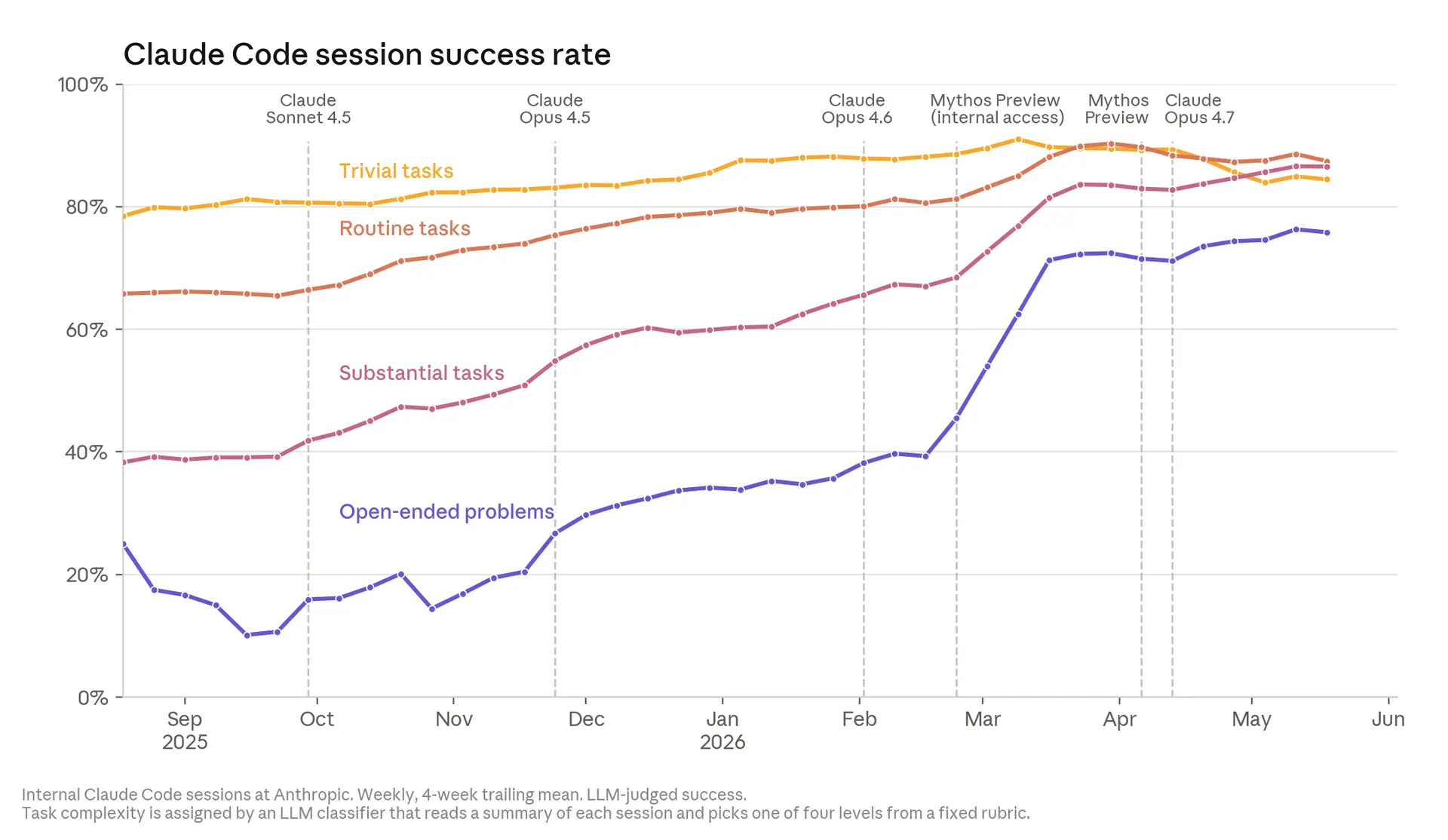
Source: METR time-horizons study β exponential growth, no sign of slowing.
A new Moore's Law for AI agents.
Show of hands
How many of you have merged a PR this month that included code an agent wrote β and you didn't read it line by line?
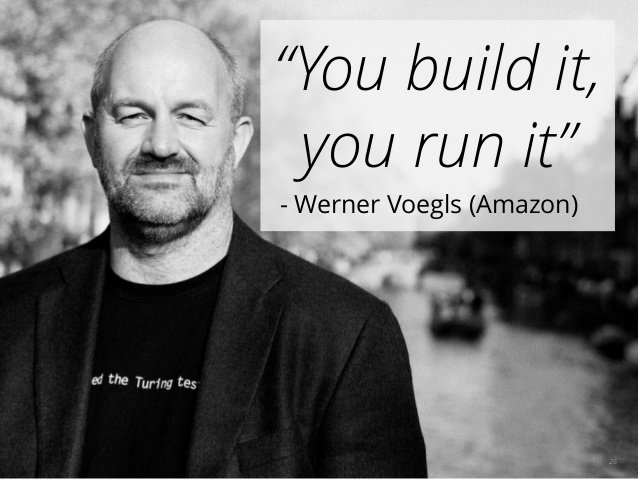
Werner Vogels Β· Amazon Β· 2006
You didn't build it.
Your agent built it.
So who the π€¬
runs it?
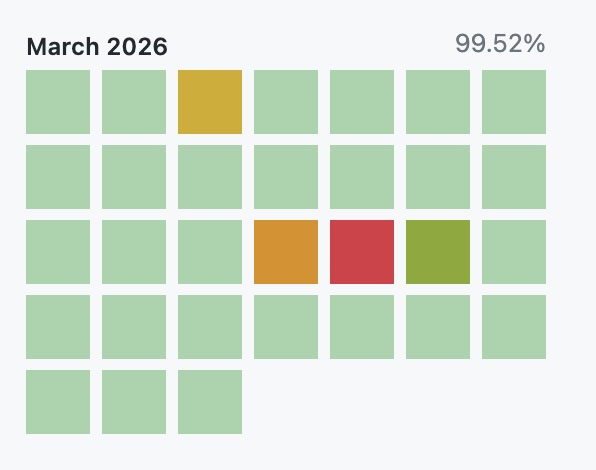
GitHub Β· March 2026 Β· 99.52% uptime
"In six months AI would be writing 90 percent of code"
Dario Amodei Β· Anthropic CEO
AI would replace developers?
The definition of 'developer' expanded to anyone who can prompt.
The gap between "easy to ship" and "safe to ship" is enormous.
"When code breaks, you are not reconstructing intent. You are reverse-engineering a decision process that was never explained and no longer exists."
β David Monnerat
The codebase is accumulating decisions
that nobody made.
Where do we go from here?
Your job
1. Define what good behaviour looks like
2. Detect deviation
What agents need
1. Goal
2. A way to verify their work
| You did this (humans) | You'll do this (agents) |
|---|---|
| Hire engineer | Spin up agent |
| Set expectations & 1:1s | Define Goals, SLOs & instrument |
| Code reviews | Behavioural reviews via traces / metrics |
| Performance evaluations | SLO compliance reports |
Stop reviewing code.
Start reviewing observable behavior.
What the agent ships
What you demand instead
These rules aren't in the code. They're in the contract. Enforced via observability, not line-by-line review.
Not intent
Intent
Code is agent-observable if a person (or an agent) can reason about its behaviour without reading the source. That means structured logs with semantic event names, metrics with documented units and labels, traces with attributes that explain intent.
SLOs turn your intent from the vibe of just "Working" to being a measurable contract.
As a manager you set OKRs for your employees.
As an agent manager you set SLOs.
Canonical tool: OPA (Open Policy Agent) β CNCF graduated, used at Netflix, Goldman Sachs, Google Cloud.
What's next
Emerging Policy-as-Prompt
research and tools
Tooling exists β ecosystem is early
Old: tail logs
You are the investigation engine.
New: AI investigation report
You evaluate the hypothesis.
Use your AI
bullshit meter
If the report is wrong, ask three questions:
Old
Operational metrics matter more, not less: MTTR, MTBF, SLO compliance, error budget burn rate.
Things to be good at
"You build it, you run it."
β"You ship agents, you own their outcome."
Accountability hasn't moved. The keystrokes have.
What does good behaviour look like?
Have you defined the SLOs?
How will I know if it's misbehaving?
Is the instrumentation in place?
Who bears the responsibility?
Is responsibility clear?
"If you can't answer those three, you're not ready to ship β regardless of who wrote the code."
AWS X DevOps Β· 2026
Your job isn't writing/reading code. It's writing/reading systems.
Ran Tavory Β· @rantav
Thank you.